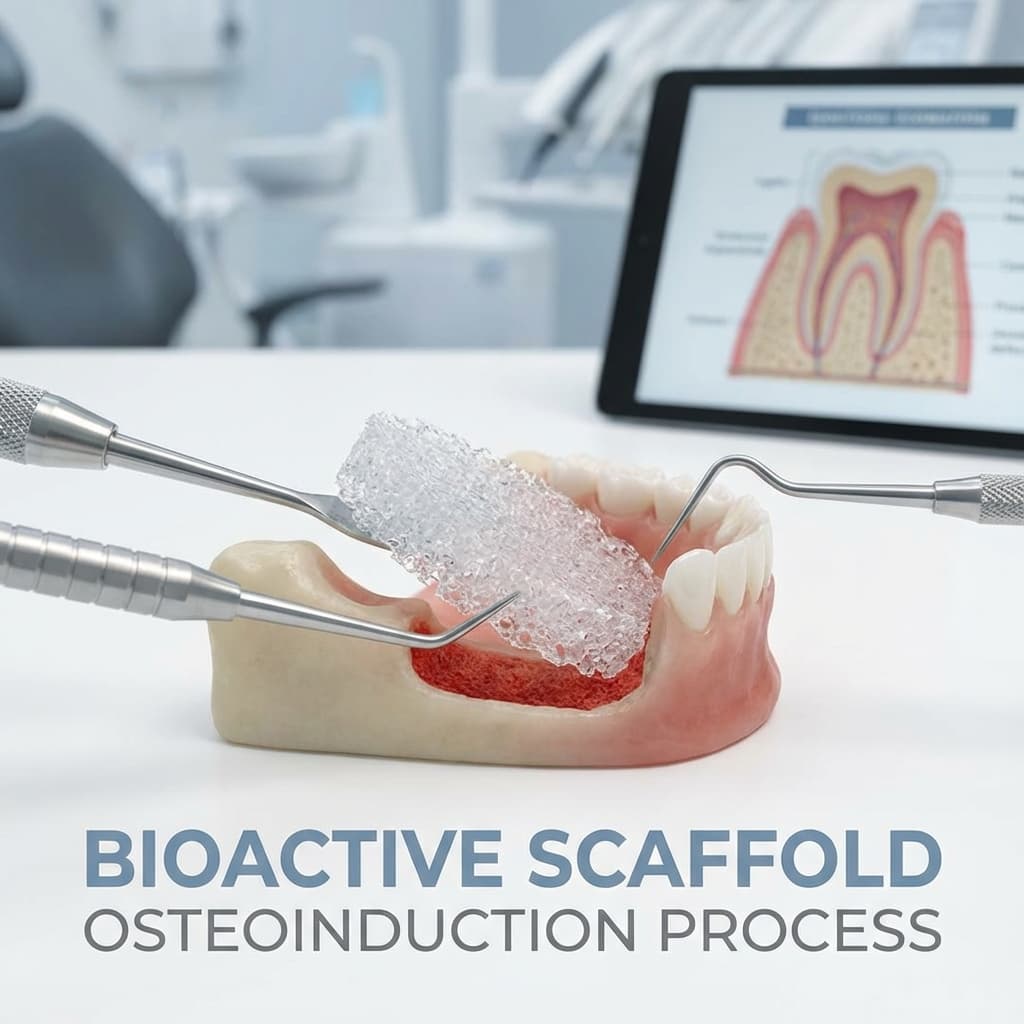
When is Bone Insufficient?
After losing a tooth, the bone surrounding it begins to atrophy. If a lot of time has passed since the extraction, it may turn out that the amount of bone is insufficient to stably hold an implant. This is when Guided Bone Regeneration (GBR) comes to the rescue.
What Does it Involve?
The procedure involves supplementing the missing tissue with a special biomaterial (bone substitute). This is a granule often mixed with the patient's own bone or platelet-rich plasma.
The entire area is covered with a special barrier membrane that protects the regenerated area.
Sinus Floor Elevation (Sinus Lift)
In the lateral maxillary areas (upper molars), there is often no room for an implant due to a low-lying maxillary sinus.
The Sinus Lift procedure involves gently lifting the membrane lining the sinus and introducing bone substitute material beneath it.
Thanks to these procedures, implant treatment is possible for almost any patient, even in challenging anatomical conditions.