Back to Knowledge Base

Dental Implants: A Comprehensive Guide for Patients

Dental Implants: A Comprehensive Guide for Patients
2024-06-20

What is a Dental Implant?


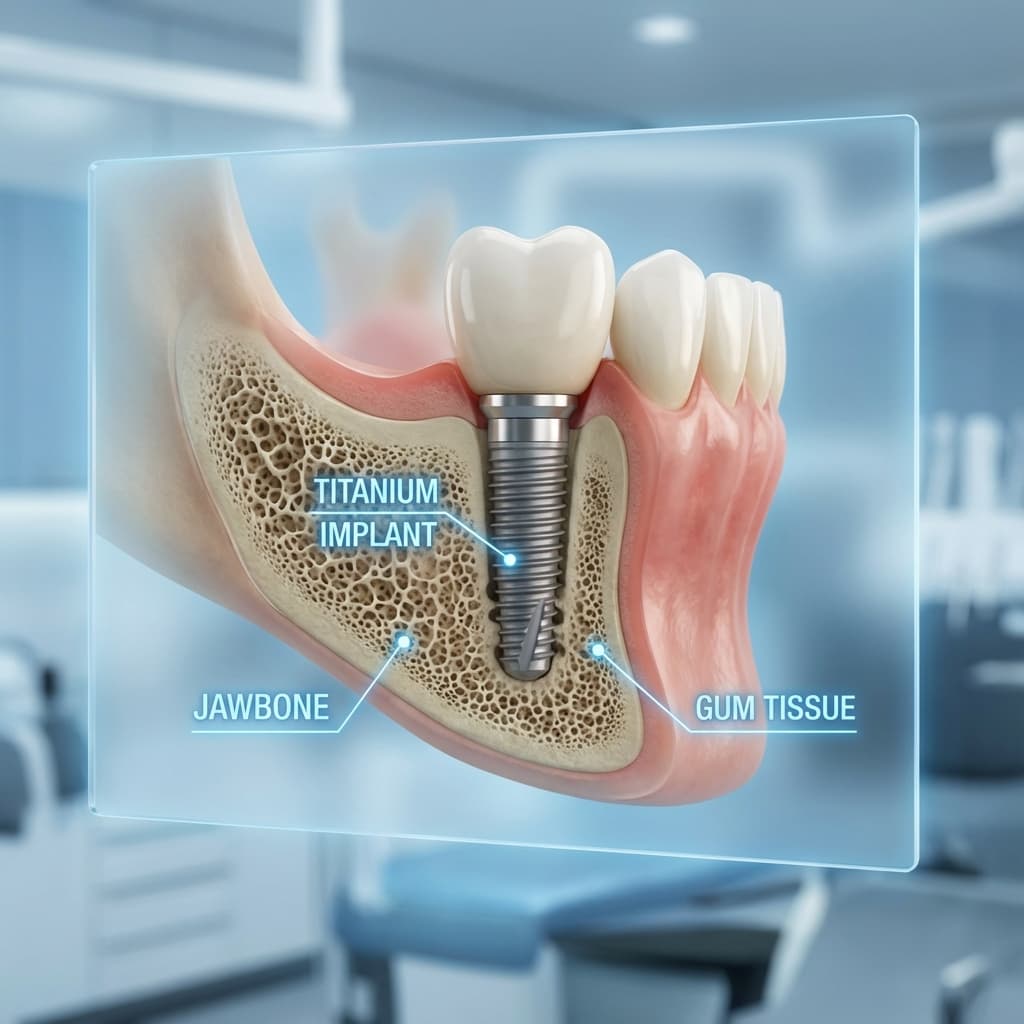
A dental implant is a small, precise screw made of titanium or zirconia that replaces the root of a lost tooth. It is implanted directly into the jawbone or mandible, where it undergoes the process of osseointegration, meaning it permanently fuses with the bone tissue.


Structure of an Implant


The entire implant system consists of three main components:

  • Screw (Actual Implant): The invisible part, embedded in the bone. It replaces the root.
  • Connector (Abutment): The element connecting the implant to the crown.
  • Prosthetic Crown: The visible part of the tooth (what is seen in the smile).

  • Why Titanium?


    Titanium is a completely biocompatible metal. This means that the human body does not treat it as a foreign object and does not reject it. Moreover, titanium has the unique ability to form a chemical bond with the bone, ensuring remarkable stability.


    Advantages of Implants:


  • Bone Protection: They prevent bone atrophy that occurs after tooth loss (lack of load causes resorption).
  • Protection of Adjacent Teeth: There is no need to grind down healthy adjacent teeth (as with bridges).
  • Aesthetics and Functionality: Implants look and function exactly like natural teeth. Chewing force is restored to 100%.

  • Deciding to implant is an investment in the health of the entire oral cavity for years.